
The simple act of standing up is something most people take for granted. However, for individuals recovering from surgery, living with chronic weakness, or managing age-related mobility decline, that transition from sitting to standing can become a daily obstacle. For many years, caregivers relied on manual lifting techniques, often leading to significant physical strain and injury. This is where the electric sit to stand lift has revolutionized patient care. Unlike manual lifts that require substantial physical effort, the electric version provides a mechanically powered, smooth, and controlled transfer. It respects the patient’s ability to bear partial weight while eliminating the dangerous forces placed on a caregiver’s back, shoulders, and knees. This piece of equipment is not merely a tool for transportation; it is a cornerstone of dignified, safe, and functional rehabilitation. By engaging the patient’s own muscles and balance systems, it helps maintain lower body strength and circulation, which are critical for long-term health outcomes. For caregivers, it changes the entire dynamic of a workday, turning a physically draining task into a safe, predictable procedure. The modern healthcare environment demands solutions that protect both the patient and the provider, which makes understanding this technology essential for anyone involved in home care, skilled nursing, or physical therapy.
The Mechanics of Modern Mobility: Understanding the Electric Sit to Stand Lift
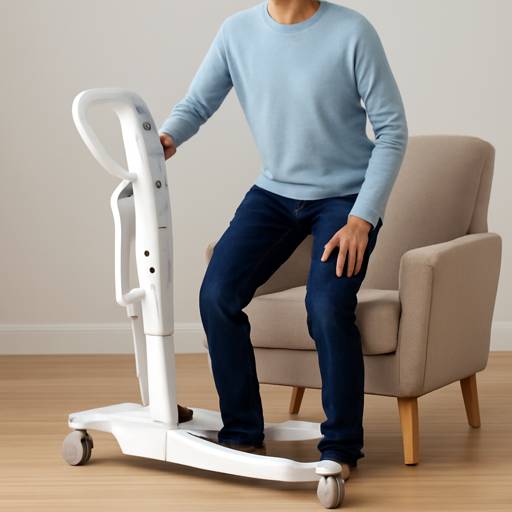
To fully appreciate the value of this equipment, one must understand its engineering. An electric sit to stand lift is designed on a simple yet powerful premise: using an electric actuator to raise a person from a seated position into a near-standing posture. The unit typically consists of a stable, wheeled base, a vertical mast, and a set of padded supports that cradle the patient’s knees and back. The key differentiator from a manual hydraulic lift is the electric motor. Instead of a caregiver pumping a handle, a simple push of a button on a remote control engages a smooth, battery-powered lifting mechanism. This provides several distinct advantages. The movement is consistent and predictable. It moves at a steady pace, which is crucial for a patient who may feel dizzy or anxious about the transfer. There is no jerking or hesitation, which can occur with manual pumping if the caregiver becomes fatigued. Furthermore, the electric system provides a power-down option, meaning the lift is never forced into a descent. This controlled power is vital for patients with fragile bones or compromised skin integrity. The battery offers portability, allowing the lift to be moved from room to room without needing to be plugged into a wall outlet during use. When not in operation, the base often retracts or spreads to maneuver around furniture and narrow doorways. This blend of mechanical efficiency and patient-centered design makes it the preferred choice for frequent daily transfers, drastically reducing the accumulated physical toll on caregivers. The chassis is built from steel or high-grade aluminum, ensuring it can handle the daily rigors of a busy household or facility without compromising safety. Ultimately, the engineering behind the electric lift is about removing the element of human effort from the lifting equation, replacing it with precise, repeatable mechanical assistance.
Reducing Risk and Strain: The Clinical and Caregiver Advantages
The primary driver for adopting an electric sit to stand lift in any care setting is risk mitigation. For the patient, the primary risk is falling. Manual transfers, even with two caregivers, can be unpredictable. A patient might suddenly lose balance or buckle their knees, leading to a hard fall. An electric lift, however, is designed with a wide, stable footprint and locking casters that prevent the device from tipping. The sling or vest attachment keeps the patient securely connected to the lift throughout the entire movement cycle. This creates a fail-safe environment where partial weight bearing is encouraged but complete collapse is impossible. For the caregiver, the risks are equally severe. According to occupational safety data, healthcare workers suffer a disproportionately high rate of musculoskeletal injuries, particularly to the lower back. These injuries are debilitating, costly, and often career-ending. The electric sit to stand lift effectively eliminates the biomechanical strain of lifting. The caregiver’s role shifts from lifter to guide. They no longer need to bend over, twist, or pull heavy weight. Instead, they position the lift, secure the sling, and operate the controls. This preservation of physical health allows caregivers to work longer, with less burnout, and with a higher quality of care. Clinical studies consistently show that the implementation of such lifts reduces workplace injury rates by up to 50-70% in long-term care facilities. Beyond physical safety, there is a psychological benefit for the patient. Knowing they are securely attached to a powerful, reliable machine reduces fear and anxiety. This often leads to better cooperation and participation in the transfer, which is essential for rehab. The lift also allows for easier toileting, dressing, and repositioning, all of which contribute to a higher quality of life. In essence, this technology is a protective investment, safeguarding the well-being of two vulnerable populations: the patient and the person caring for them.
Real-World Impact: From Living Rooms to Rehabilitation Centers
The theoretical benefits of an electric sit to stand lift become tangible when viewed through real-world applications. Consider the case of a 70-year-old man recovering from a total hip replacement. His home has narrow hallways and a standard-height toilet. Without a lift, his spouse would need to help him stand every time he needed the bathroom, a painful and risky process for both. Implementing an electric sit to stand lift in the home allowed him to bear weight on his healthy leg while the lift handled the rest. His spouse simply guided him and operated the remote. Within two weeks, his transfer ability improved markedly, and the fear of a dislocating the new hip joint diminished. In a skilled nursing facility, the impact is even more pronounced. A facility in Ohio reported that after adopting a fleet of electric sit to stand lifts for their sub-acute rehab unit, the incidence of staff back injuries dropped by 40% in the first quarter alone. Patient satisfaction scores also rose, as residents reported feeling more secure and independent during transfers. Another example involves a bariatric patient who was previously considered a "two-person assist" for any transfer. The electric sit to stand lift with a high weight capacity changed this paradigm. A single caregiver could now safely manage the transfer, preserving the patient’s dignity and enabling more frequent mobilization, which is crucial for preventing pressure ulcers and maintaining respiratory function. These lifts also shine in hospice care, where gentle, pain-free movement is paramount. The smooth, quiet electric motor allows a nurse to transfer a patient from bed to a chair without the jarring sounds or movements that cause distress. In every scenario, from a private residence to a bustling hospital floor, the core narrative is the same: the electric sit to stand lift transforms a physically demanding, dangerous task into a safe, controlled, and compassionate interaction. It bridges the gap between total dependence and full independence, offering a middle ground where strength is used but risk is managed. The data is clear: facilities and families that invest in this technology see tangible improvements in safety, satisfaction, and operational efficiency, proving that the right tool truly does change the outcome.
