
The transition from sitting to standing is a deceptively complex maneuver. For millions of individuals recovering from surgery, managing chronic conditions, or battling age-related weakness, this simple act becomes a daily struggle fraught with risk. For the caregivers—whether professional nurses or family members—assisting with this transfer is the single most common cause of workplace injury in healthcare. The traditional method of manual lifting strains the lower back, shoulders, and knees, leading to debilitating injuries that sideline experienced staff and increase operational costs. Enter the power sit to stand lift, a mechanical marvel designed not just to move a patient, but to preserve their dignity, accelerate their rehabilitation, and protect the long-term health of those who care for them. Unlike total body lifts that require full suspension, these devices are built for individuals who possess some weight-bearing capacity and trunk control. They facilitate a natural, active transfer, engaging the patient’s leg and core muscles. This is not passive transportation; it is an active, therapeutic event. By providing a stable pivot point and gentle upward force, these lifts bridge the gap between complete dependency and independent ambulation, transforming the biomechanics of the transfer for both parties involved.
Mechanics, Muscles, and Meaning: How a Power Sit to Stand Lift Works
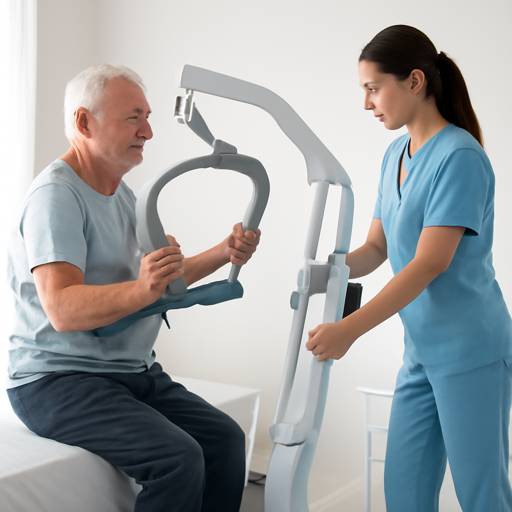
Understanding the operational superiority of a power sit to stand lift begins with its fundamental engineering. The unit typically consists of a stable base, a vertical mast, a hydraulic or electric lifting mechanism, and a padded knee block. The patient sits on the edge of the bed or chair with their feet flat on the base plate. The knee block is positioned snugly against their shins to prevent forward sliding, and a vest-style or full-body sling is secured around their torso. As the caregiver activates the lift, the mast pivots forward, or the arm raises, providing a steady upward and slightly forward motion. This trajectory mirrors the natural momentum of standing, encouraging the patient to actively participate by pushing through their feet. The result is a collaborative lift, not a dead-weight hoist. This active participation is crucial. It stimulates the vestibular system, improves circulation, and maintains bone density through axial loading. Physiologically, the act of standing, even with assistance, triggers a cascade of positive effects: improved respiratory function, enhanced bowel motility, and reduced risk of pressure injuries from prolonged sitting. From a caregiver perspective, the lift effectively eliminates the high-risk shear and torsional forces that occur when manually pivoting a patient. The power sit to stand lift becomes a force multiplier, allowing a single caregiver to manage a transfer that would otherwise require two or three people. This single intervention can dramatically reduce lost work days due to musculoskeletal disorders. Furthermore, the psychological impact cannot be overstated. Patients who can actively participate in their own care report higher levels of self-esteem and a greater sense of agency. They are not simply being lifted; they are being empowered to regain a fundamental human skill.
Critical Applications: Where These Lifts Excel in Clinical and Home Settings
The versatility of the power sit to stand lift makes it an indispensable tool across a wide spectrum of care environments. In acute hospital settings, these lifts are ideally suited for post-operative patients, particularly those who have undergone hip or knee replacements. The controlled, steady motion allows for safe weight-bearing as prescribed by physical therapists, reducing the risk of dislocation or falls during the critical early recovery phase. In long-term care facilities, they are a cornerstone of a zero-lift policy, dramatically reducing the incidence of staff injuries while promoting resident mobility several times a day. Perhaps the most transformative application is in the home care environment. Family caregivers, often untrained and physically unprepared for the demands of patient handling, face immense risk. A power sit to stand lift provides a mechanical safety net, enabling them to assist a loved one without fear of dropping them or injuring their own back. The equipment’s compact footprint and battery-powered operation make it ideal for navigating tight doorways and rooms without dedicated lift stands. There are also specific clinical conditions where these lifts outperform other mobility aids. For patients with Parkinson’s disease, the floor-to-base and forward momentum can help break through the freezing of gait often experienced when initiating a stand. For individuals with multiple sclerosis, the consistent and predictable force compensates for fluctuating muscle weakness. However, it is critical to conduct a proper clinical assessment. The patient must have sufficient upper body strength to hold the sling handles and the cognitive ability to follow simple commands. They must be able to bear at least 50% of their own body weight through their legs. For patients with severe osteoporosis, frail skin, or lower extremity fractures where weight-bearing is contraindicated, a full-body sling lift is the safer alternative. Proper application of the knee block is also essential; if positioned too high, it can cause discomfort or impede knee flexion, while a position too low offers no stability. Training, therefore, is not optional—it is integral to the safe and effective use of the device.
Beyond the Transfer: Real-World Impact and Technological Evolution
To fully appreciate the value of a power sit to stand lift, one must look beyond the mechanics of a single transfer and examine its systemic effects. Consider a case study from a 200-bed skilled nursing facility that implemented a facility-wide sit-to-stand program. Prior to the initiative, the facility reported an average of 22 worker compensation claims per year related to patient handling, many involving back strain and shoulder injuries. After mandatory training and the deployment of a sufficient number of lifts, that number dropped to just 4 claims within 18 months. The cost savings in insurance premiums, modified duty wages, and staff retention easily justified the capital investment. But the most compelling data came from patient outcomes. The facility documented a 27% reduction in patient falls during transfer attempts. By encouraging consistent, daily standing, residents maintained lower extremity strength longer, reducing the overall need for total-lift assistance. Another real-world application exists in the field of bariatric care. High-capacity power sit to stand lifts, capable of supporting 600 to 1000 pounds, have revolutionized the care for patients with larger body habitus. These units feature wider bases for stability and more powerful motors, allowing caregivers to safely manage transfers that were previously high-risk maneuvers, often requiring an entire team. The evolution of technology has further enhanced these devices. Modern units now offer digital load cells that provide real-time feedback on the patient’s weight and the force being applied. Some models include semi-automated features, where the lift uses sensors to detect resistance and adjust its speed and trajectory accordingly, creating a smoother, safer motion. Battery technology has advanced as well, with sealed lead-acid or lithium-ion batteries that provide ample power for a full day of use and rapid recharging. Ergonomic handles and intuitive controls reduce the cognitive load on the caregiver, allowing them to focus on patient alignment and communication rather than struggling with complex machinery. This seamless integration of human skill and mechanical power defines the future of safe patient handling, making the standard of care increasingly inaccessible without the aid of a dedicated power sit to stand lift.
